
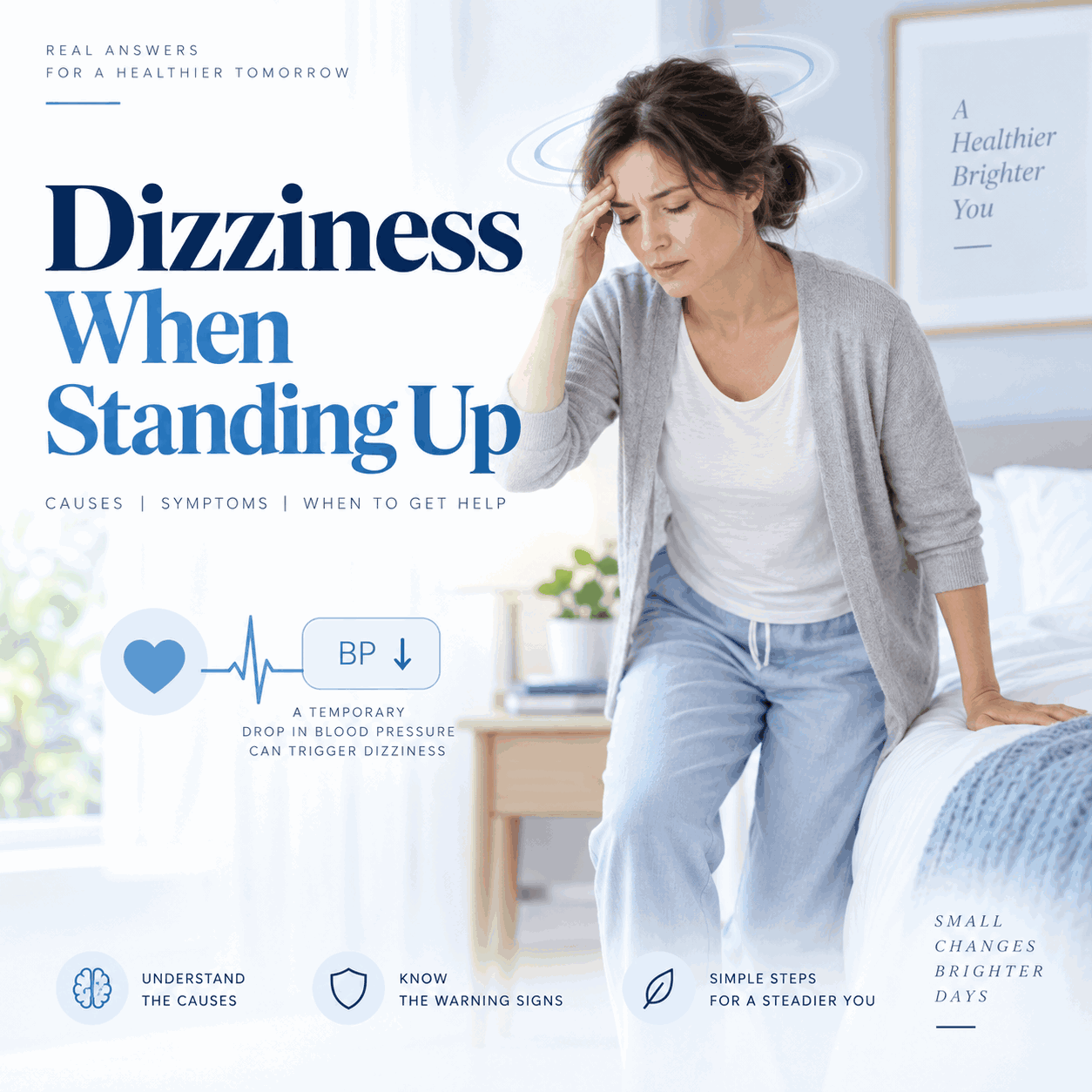
Feeling dizzy when standing up is often caused by a brief change in blood pressure as your body adjusts to an upright position. It can happen after getting out of bed quickly, being dehydrated, spending time in the heat, or taking certain medications.
An occasional episode that lasts only a few seconds is not always a sign of disease. But repeated dizziness, fainting, a racing or irregular heartbeat, chest pain, shortness of breath, or new neurologic symptoms should not automatically be blamed on “low blood pressure.”
If you feel briefly lightheaded immediately after standing and recover within seconds, a temporary circulatory adjustment may be responsible. If it keeps happening, causes near-fainting, or comes with other symptoms, the cause should be evaluated rather than guessed from one blood pressure reading.
First, What Does “Dizzy” Actually Feel Like?
The word dizziness can describe very different sensations. Identifying the type can help narrow down what may be happening.
| What you feel | What it may suggest |
|---|---|
| Feeling faint, vision dimming, weakness after standing | A blood pressure or circulation-related change may be involved |
| The room feels like it is spinning | Vertigo or an inner-ear cause may be more relevant |
| Dizziness with a suddenly racing or irregular heartbeat | Heart-rate or rhythm changes may need to be considered |
If you stand up and feel as though you may faint, your vision briefly darkens, or your legs become weak, that is closer to lightheadedness or presyncope than true spinning vertigo.
By contrast, if turning your head or rolling over in bed makes the room spin, the cause may not be related to blood pressure at all.
Why Can Standing Up Make You Lightheaded?
When you stand, gravity temporarily shifts some blood toward your legs and lower body. Your nervous and cardiovascular systems normally respond quickly by tightening blood vessels and adjusting heart activity so that enough blood continues to reach your brain.
If that adjustment is briefly delayed, you may notice lightheadedness, dimmed vision, weakness, or an unsteady feeling.
This may be more noticeable after:
- getting out of bed quickly
- lying or sitting for a long time
- heavy exercise
- hot weather or a hot shower
- heavy sweating
- vomiting or diarrhea
- not drinking enough fluid
A short, occasional episode can occur without a serious underlying problem. A pattern that keeps returning deserves more attention.
When Dehydration Is a Clue
Fluid loss can reduce circulating blood volume, making it harder for the body to compensate quickly when you stand.
Think about what happened before the dizziness began. Recent fever, exercise, diarrhea, vomiting, heavy sweating, or low fluid intake can all provide useful context.
Other signs that may occur with dehydration include thirst, dry mouth, darker urine, or less frequent urination.
That does not mean everyone with dizziness should simply drink large amounts of water. People with heart or kidney conditions, for example, may have individualized fluid recommendations.
Could a Medication Be Contributing?
The timing of symptoms matters.
If dizziness began soon after a new medicine was started or a dose was changed, mention that when you seek medical advice. Some blood pressure medicines, diuretics, antidepressants, and other medications can affect blood pressure, fluid balance, or the body’s response to standing.
What Is Orthostatic Hypotension?
Orthostatic hypotension is one specific cause of symptoms after standing.
A commonly used clinical definition is a decrease in systolic blood pressure of at least 20 mmHg or diastolic blood pressure of at least 10 mmHg within three minutes of standing.
This is why one blood pressure number does not tell the whole story.
Some people naturally have relatively low blood pressure and feel completely well. Someone else may develop symptoms when their pressure falls significantly from their usual level after standing.
Symptoms, the change from baseline, medication use, medical history, and heart rate may all be relevant.
What If Your Blood Pressure Looks Normal?
A normal reading does not rule out every cause of standing dizziness.
Your blood pressure may already have recovered by the time you measure it, or the symptom may be related to something other than a major blood pressure drop.
For example, some people experience an abnormal increase in heart rate when upright. Conditions involving orthostatic intolerance, including postural orthostatic tachycardia syndrome (POTS), may be considered in the right clinical setting.
However, dizziness plus a fast heartbeat does not diagnose POTS. Dehydration, anemia, medication effects, illness, thyroid disorders, and other causes may need to be excluded.
The practical takeaway is simple: if standing repeatedly makes you dizzy and your heart also races, report both symptoms rather than assuming the problem is low blood pressure.
Can Anemia Cause Dizziness When Standing?
Yes, anemia may contribute to lightheadedness in some people.
Anemia can also cause fatigue, weakness, shortness of breath during activity, palpitations, or headaches. Blood loss can contribute both to anemia and to reduced circulating blood volume.
Medical evaluation becomes especially important if dizziness occurs along with:
- unusual or persistent fatigue
- shortness of breath with normal activity
- frequent palpitations
- heavy menstrual bleeding
- black or bloody stool
- another possible source of blood loss
Dizziness alone cannot diagnose anemia. A healthcare professional may order a complete blood count when the history or symptoms suggest that anemia is possible.
When Heart Symptoms Change the Picture
Brief lightheadedness after standing is often not caused by heart disease. The situation changes when dizziness appears with a strong or irregular heartbeat, chest discomfort, significant breathlessness, or fainting.
Try to notice the sequence.
“I stood up, felt lightheaded for five seconds, and recovered” is different from “My heart suddenly started racing and I nearly passed out.”
Neither description establishes a diagnosis, but the distinction can help guide further evaluation.
Why Does It Happen More Often in the Morning?
Getting out of bed combines several changes at once. You have been lying down for hours, you have not had fluids overnight, and your circulation suddenly has to adapt to standing.
If you frequently feel lightheaded first thing in the morning, try moving from lying to sitting first. Sit at the edge of the bed until you feel steady before standing.
That may help with occasional mild symptoms, but repeated morning dizziness, near-fainting, or associated heart symptoms should still be evaluated.
What Should You Keep Track of?
You do not need to diagnose yourself. A short record of the circumstances around the episodes can be more helpful than repeatedly checking random numbers.
- What were you doing immediately before the dizziness?
- Were you lying down, sitting, or already standing?
- How long did it last?
- Did you feel faint, or did the room actually spin?
- Did your heart feel unusually fast or irregular?
- Had you recently exercised or been in hot weather?
- Had you experienced vomiting, diarrhea, fever, or heavy sweating?
- Was a medication recently started or changed?
If you already use a validated home blood pressure monitor, your readings may provide additional context. But home measurements by themselves do not confirm orthostatic hypotension.
How Is Repeated Standing Dizziness Evaluated?
When a blood pressure change is suspected, a healthcare professional may compare blood pressure and heart rate after resting and again after standing.
What happens next depends on the overall pattern.
Medication review and hydration history may be enough in some situations. In others, symptoms may lead to blood tests for anemia or other abnormalities, an electrocardiogram, heart-rhythm monitoring, or additional testing.
The purpose is not simply to find a low number. It is to identify why the symptom is happening repeatedly.
What Should You Do During an Episode?
If you suddenly feel as though you may faint, focus first on preventing a fall.
Sit or lie down somewhere safe rather than trying to walk through the dizziness.
Depending on the cause, these habits may help reduce mild recurring symptoms:
- rise gradually from lying to sitting and then standing
- maintain appropriate hydration
- take extra care after exercise or in hot environments
- avoid suddenly standing after prolonged rest
- review recurring symptoms with a healthcare professional
Increasing salt intake is sometimes recommended for certain forms of low blood pressure, but it is not appropriate for everyone. People with high blood pressure, kidney disease, heart disease, or other conditions may need to limit sodium.
Do not make a major change in salt intake solely because you feel dizzy when standing.
When Should You Make a Medical Appointment?
Consider medical evaluation when dizziness:
- keeps happening
- is becoming more frequent or severe
- causes near-fainting or falls
- started after a medication change
- repeatedly occurs with a racing or irregular heartbeat
- occurs with persistent fatigue or weakness
- interferes with work, exercise, or everyday activities
When Is Dizziness an Emergency?
- chest pain or pressure
- severe shortness of breath
- prolonged loss of consciousness
- sudden weakness or numbness on one side of the body
- difficulty speaking
- new confusion
- a sudden severe headache
- significant bleeding or black, tarry stool
- severe weakness with cold or clammy skin
- a very rapid or abnormal heartbeat with severe symptoms
These symptoms should not be assumed to be an ordinary blood pressure adjustment after standing.
Frequently Asked Questions
Why do I get dizzy when I stand up even if my blood pressure is normal?
A normal single reading does not rule out all causes. Your blood pressure may have recovered before it was measured, or the dizziness may involve dehydration, medication effects, anemia, heart-rate changes, an inner-ear problem, or another cause.
Is blood pressure of 90/60 mmHg dangerously low?
Blood pressure around or below 90/60 mmHg is commonly used as a reference for low blood pressure, but the number alone does not determine whether it is dangerous. Some people naturally have lower readings without symptoms. How you feel and how much your pressure changes from its usual level also matter.
Why do I feel dizzy when getting out of bed?
Standing suddenly after several hours of lying down requires a rapid circulatory adjustment. Overnight fluid loss, dehydration, medications, and other factors can make the sensation more noticeable.
Can anemia make me dizzy when I stand?
It can. Anemia may cause dizziness along with fatigue, weakness, shortness of breath, or palpitations. A blood test is needed to determine whether anemia is actually present.
Does dizziness with a racing heart mean I have POTS?
No. POTS has specific diagnostic criteria and other causes of a fast heart rate and dizziness need to be considered. Repeated standing dizziness accompanied by a racing heart is worth discussing with a healthcare professional.
Should I stop my blood pressure medicine if I feel dizzy?
No. Do not stop or change a prescription on your own. If symptoms began after a medication or dose change, contact the healthcare professional who prescribed it.
Bottom Line
Dizziness when standing up is often caused by a temporary circulatory adjustment, especially when it lasts only a few seconds after getting out of bed or standing quickly.
But standing dizziness is not automatically the same as low blood pressure.
Pay attention to whether you feel faint or experience spinning, how often it happens, whether your heart races, whether you nearly pass out, and what other symptoms occur at the same time.
Repeated episodes may be associated with dehydration, medication effects, orthostatic hypotension, anemia, abnormal heart-rate responses, or other conditions. Persistent or worsening symptoms deserve medical evaluation, while dizziness accompanied by serious heart, breathing, neurologic, or bleeding symptoms requires more urgent attention.
Medical information notice: This article is intended for general health information and does not replace individualized medical diagnosis, treatment, or advice from a qualified healthcare professional.
Sources
- MedlinePlus — Low Blood Pressure
- MedlinePlus Medical Encyclopedia — Low Blood Pressure
- MedlinePlus Genetics — Orthostatic Hypotension
- National Heart, Lung, and Blood Institute — Postural Orthostatic Tachycardia Syndrome (POTS)